From summary to decision-enabler: Building AI thought partners to activate research.

Owen Sanderson
Senior Director, Research + Design Strategy

Jane Gormley
Lead, Research + Design Strategy
AI can now turn a set of customer research sessions into a clean, accurate summary in minutes. For innovation teams working with fewer people and higher expectations, that is a real gain. But when it's time to decide what to build next, a summary rarely tells you which finding matters most or what to do about it. As human-centered designers, researchers, and strategists, closing the gap between insight and action is the work we do. So we set out to understand why and how to elevate AI's abilities as a thought-partner.
Why summaries stall decisions
Think about the best collaborator you've worked with. They likely come to you with a clear definition of the problem and an even clearer perspective on what to do next. Their clarity makes a complex challenge feel approachable, and their framing gives you something to sharpen and refine.
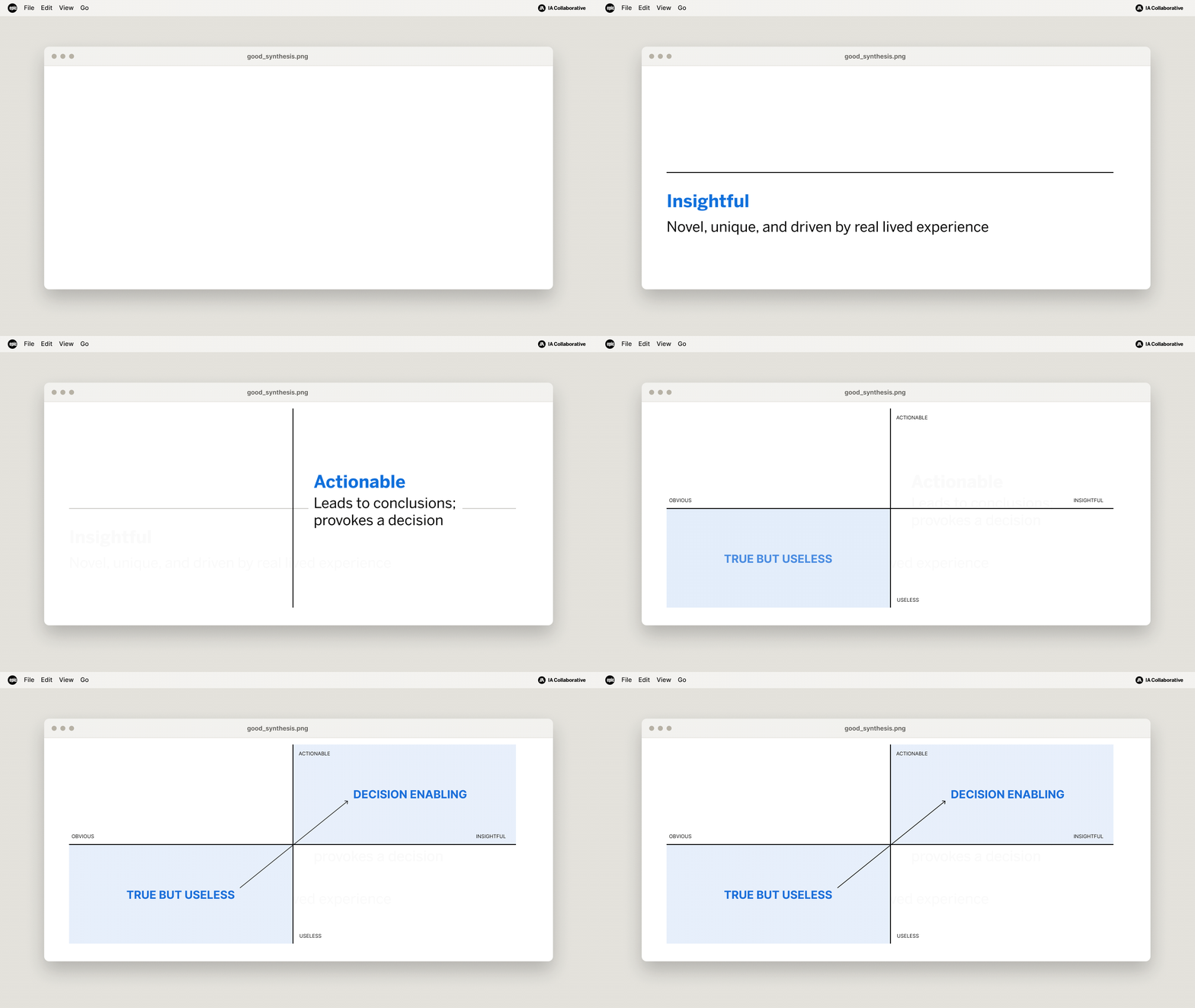
A summary, on the other hand, is uninspiring, often generic. It's focused on what's true, and as researchers we know the most valuable recommendations go beyond boilerplate findings to focus on what’s most insightful and actionable.
Creating a better thought partner
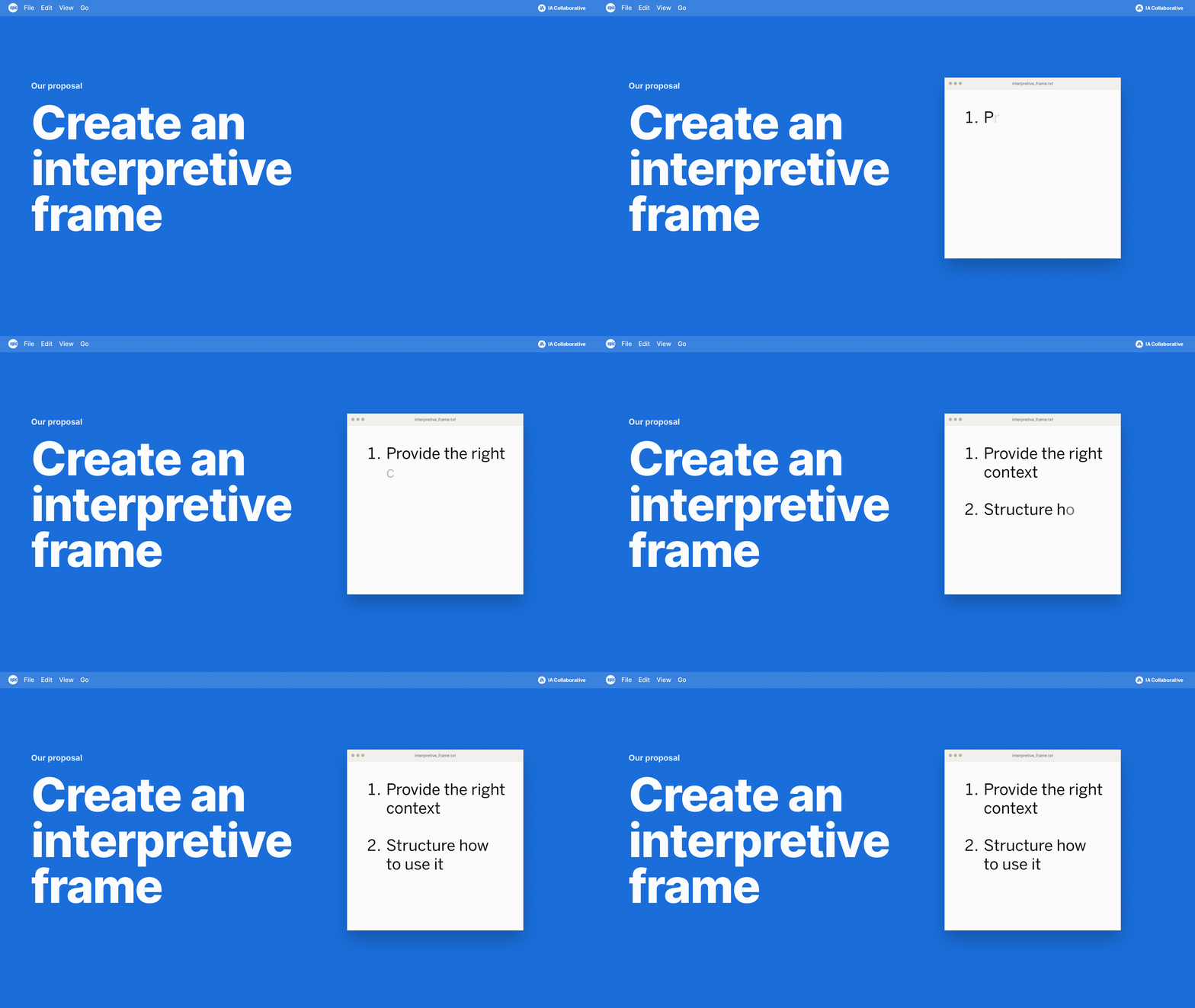
As part of our presentation at EPIC2026, we introduced the idea of an interpretive frame—a pathway to help make LLMs better thought partners by giving them:
1) the right context and 2) a structure on how to use it.
1. Collect the right context
When we synthesize research, we use context as the lens for deciding what's important, yet we rarely document it with much rigor because today, it lives in our heads as we synthesize. But, as we shift to working alongside LLMs more and more, we must make that context explicit and machine-readable so our agentic thought partner is operating from the same knowledge bank we are. We propose two types of context, each of which serve a different purpose.
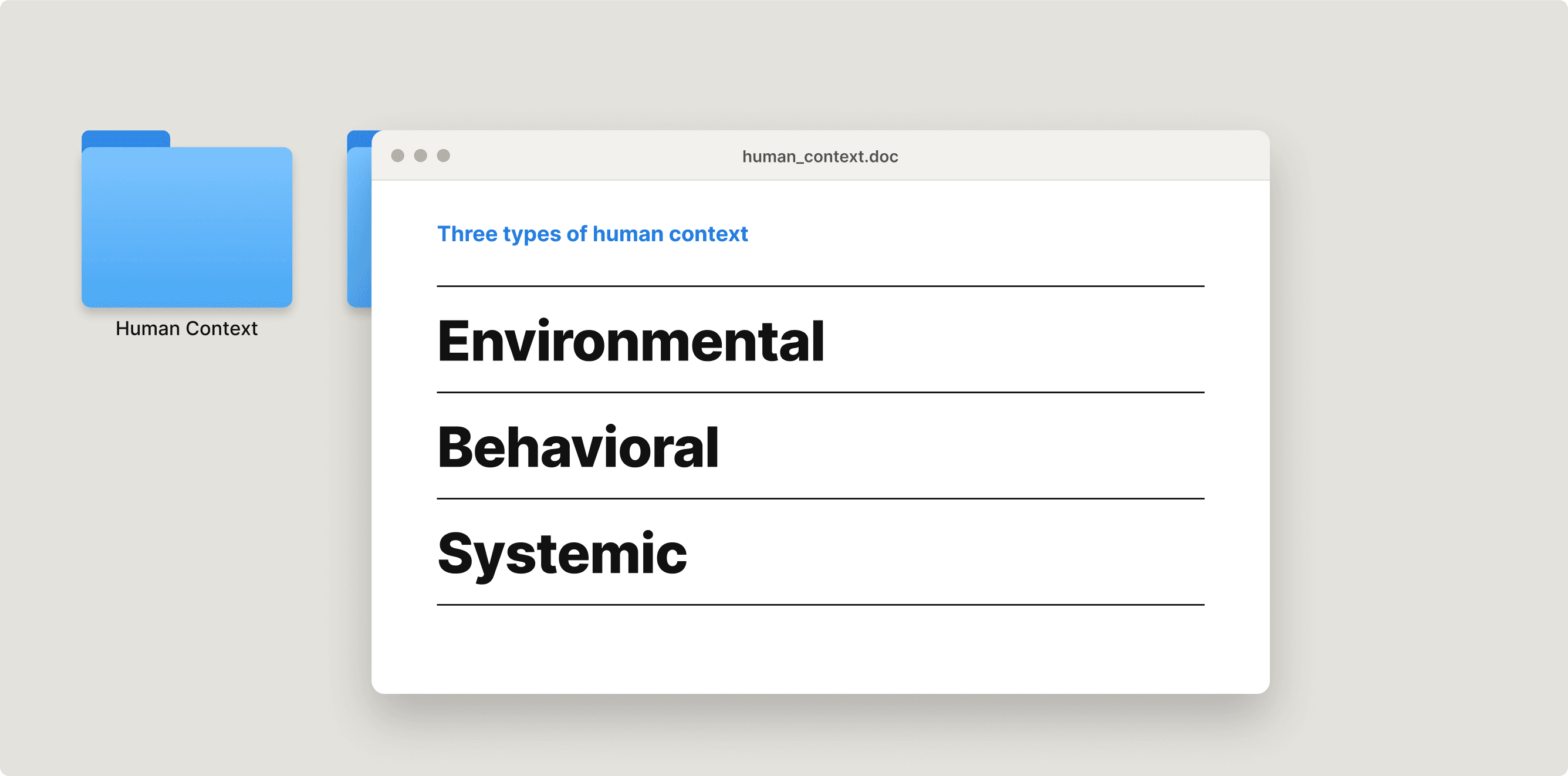
- **Human context** is everything we see in the field. It’s the **environments** our participants exist in, the **behaviors** we observe that differs from what they say, and the broader **systems** that shape them.
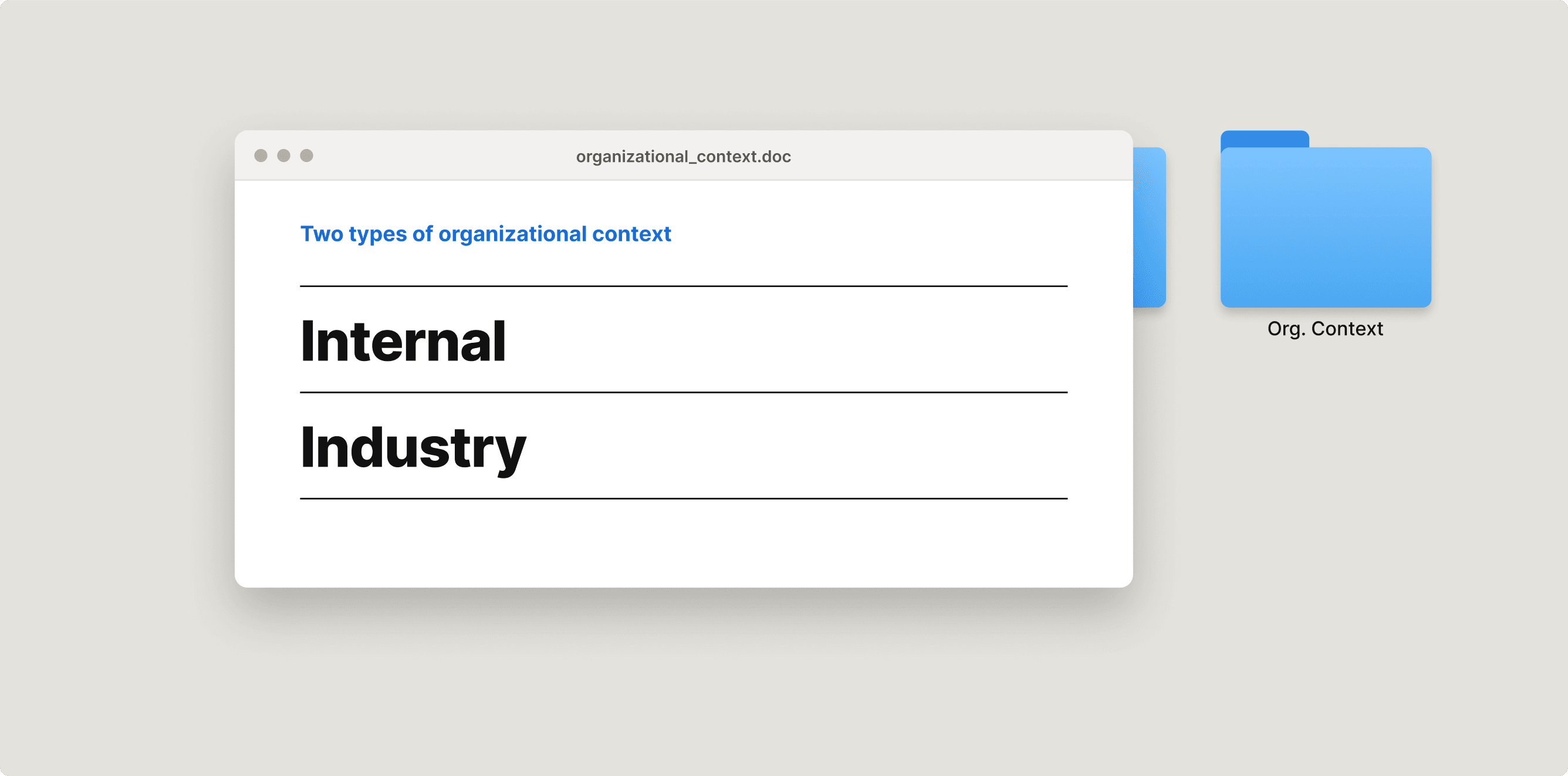
- **Organizational context** covers the decisions the work must respond to: what it informs, why it matters now, where stakeholders disagree, and the **internal** and **industry** pressures shaping the answer.
2. Structure how to use it
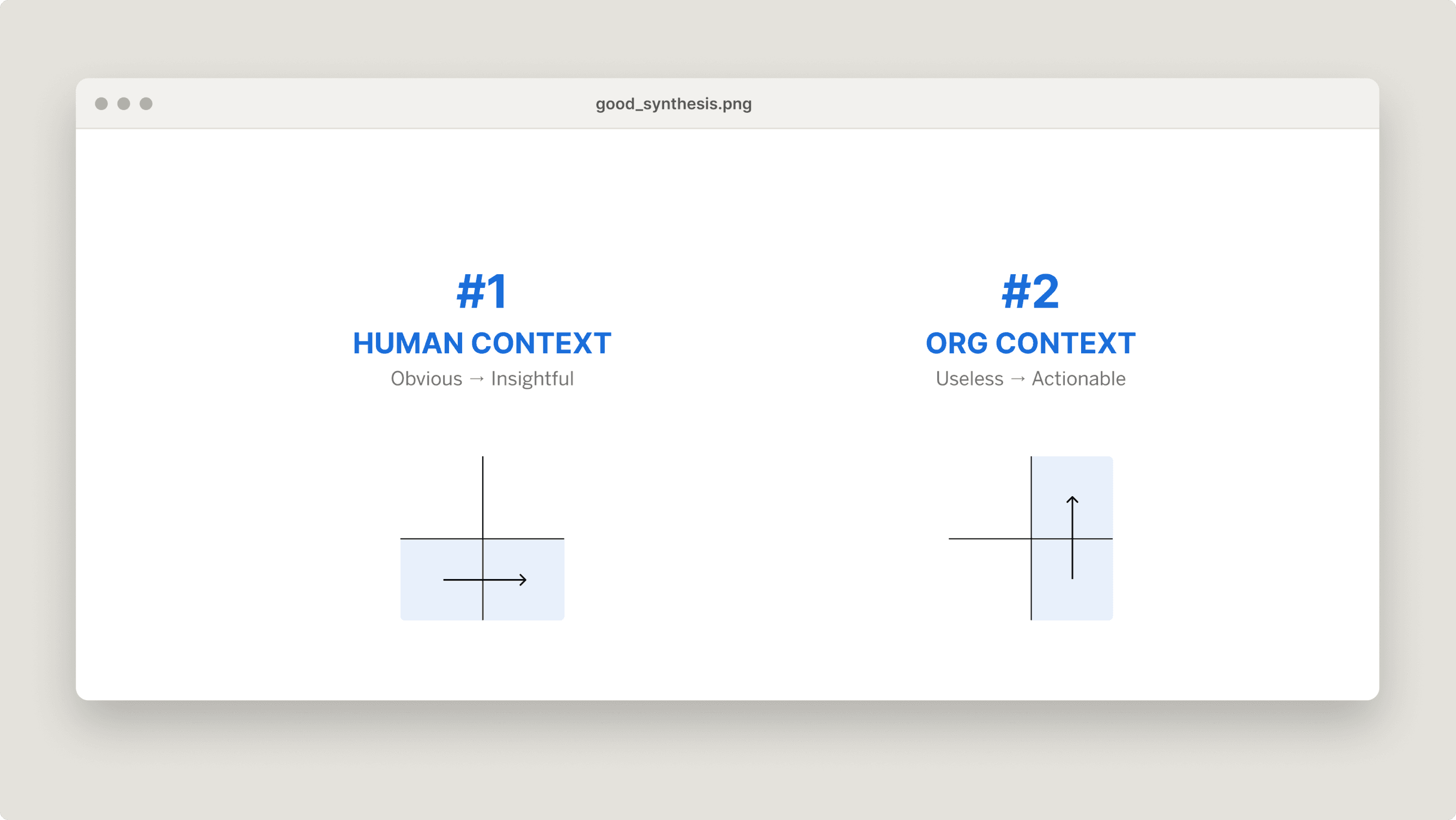
Context works as the organizing lens for making meaning. By highlighting the gap between what people say and what they do, human context shows us what's most insightful. Placing those insights into an organizational context makes them actionable enough to drive a decision. Starting with the human layer keeps what the organization hopes to hear from shaping what the research finds.
This mirrors our own synthesis process: working from the bottom up to identify real needs, then contextualizing them for a specific client, with a specific challenge, at a specific time.
What this looked like in practice
We worked with a traditional healthcare provider exploring a digital wellness offering, with contextual research across the country. As a proving ground for the interpretive frame, we retrospectively generated insights from the same transcripts with and without added context.
Despite having the same synthesis instructions, insight 1 was flat. "People trust both experts and people like them” isn’t incorrect, it’s just a summary that doesn’t inspire action.
By adding our own field observations, early hunches, and organizational priorities we got to insight two: "Trust grows when care reflects people's core beliefs. Tailor guidance to make it personal and actionable."
With a stronger perspective on next steps, we were more easily able to engage with the insight. In this case, that meant thinking through how it applies to the many participants we observed who distrust the health system—whose core beliefs sit closer to alternative approaches than an evidence-based system can offer. How could we serve them within the scope the organization was comfortable with?
From that question, we refined the generated insight into our own, human-guided iteration. "Tailored guidance isn't about offering different advice. It's about how you listen in order to personalize the delivery." This refined idea points to a way to make care feel personal without building highly curated content for every person, an idea that’s much more actionable for a major health system needing to operate at scale.
PUT IT INTO PRACTICE
Creating Your Own Interpretive Frame
This is one small example of how we've started to experiment with LLMs, tapping into their promise while elevating what we do best as humans. We'd encourage you to take the experiment further. Here's how you can start building your own interpretive frame.
Where we can help
A powerful interpretive frame can be much more robust than this quick version—but requires strategic consideration and application. But fret not, we can help you get there. At IA Collaborative, we’re experts in capturing the context that matters and designing the workflows and AI systems that extend and scale the impact of research.
Bring us a decision you're grappling with, and we'll help you move from "Insight to Action”.
Global Navigation
# IA Collaborative
> Navigation Map