Your Organization Already Knows More Than It Can Use. AI can change that.

Yimei Hu
Senior, Research + Design Strategy

Zach Schlossberg
Director, Research + Design Strategy
The Problem
Most mature organizations do not have an insight shortage. They have an activation problem.
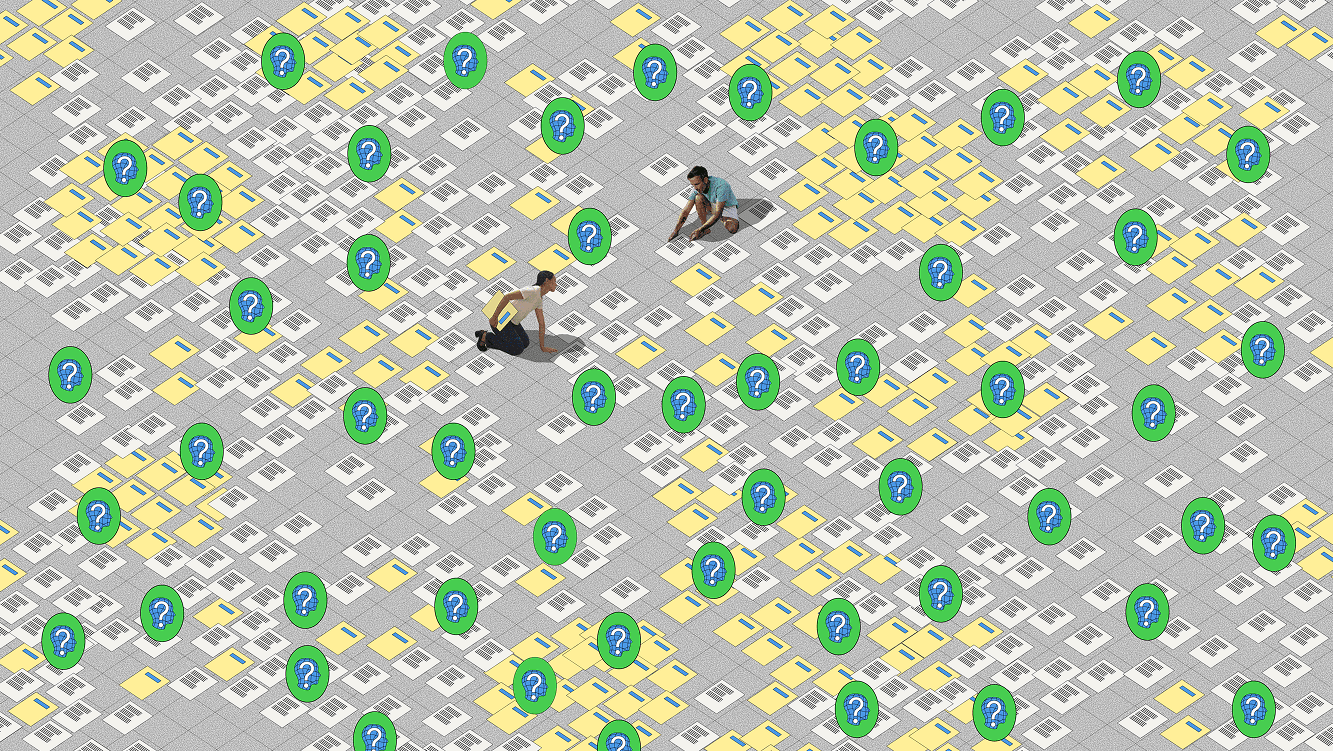
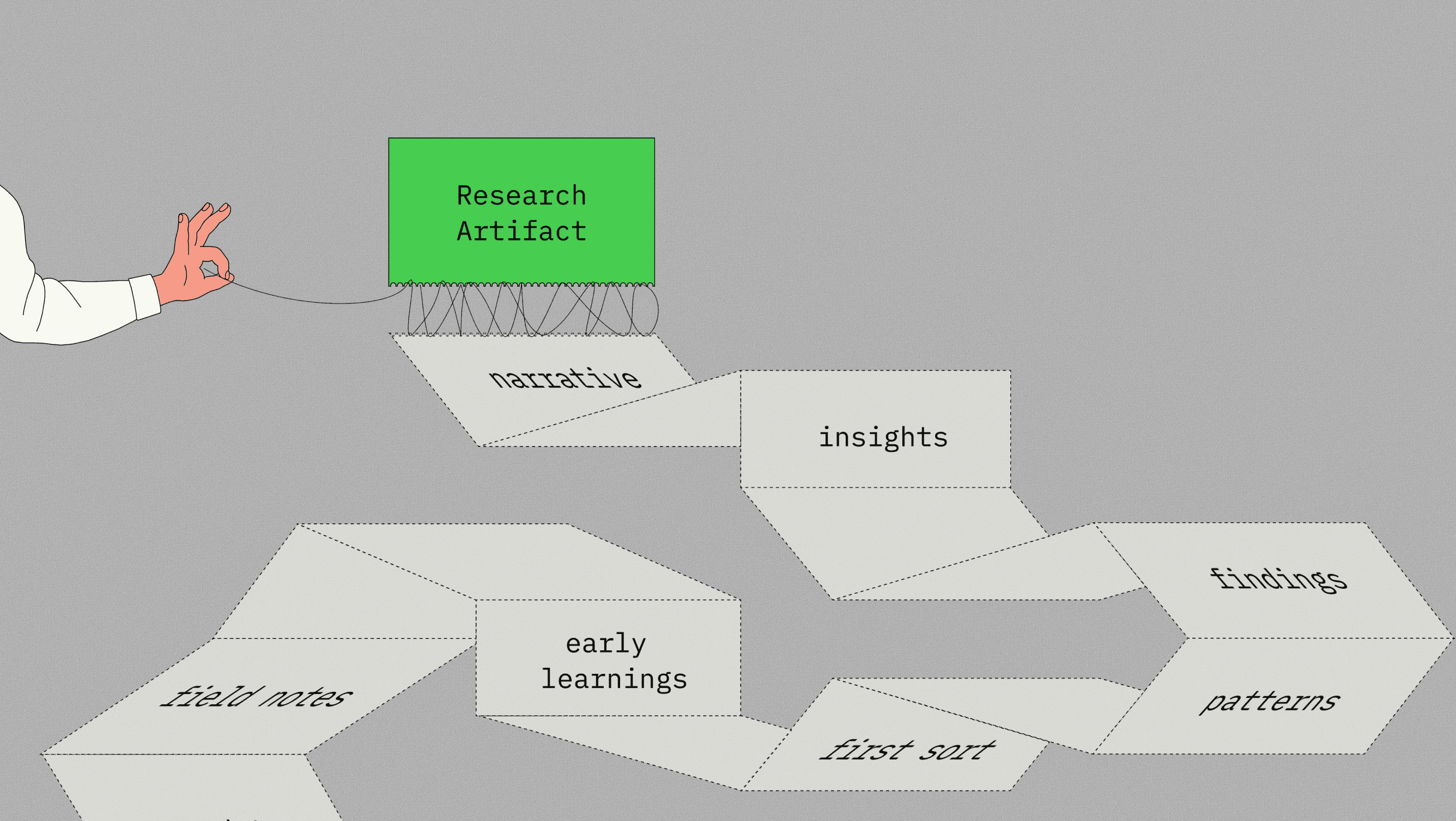
Years of customer research sit across decks, repositories, teams, markets, and the heads of people who were there when the work happened. The knowledge exists. But when a new decision comes along, someone still has to find it, remember what it meant, connect it to everything else the organization has learned, and translate it into the problem at hand. The reality is that the research artifacts of yesterday are at odds with the pace of modern business decisions.
The Problem Isn’t New, It’s Newly Urgent
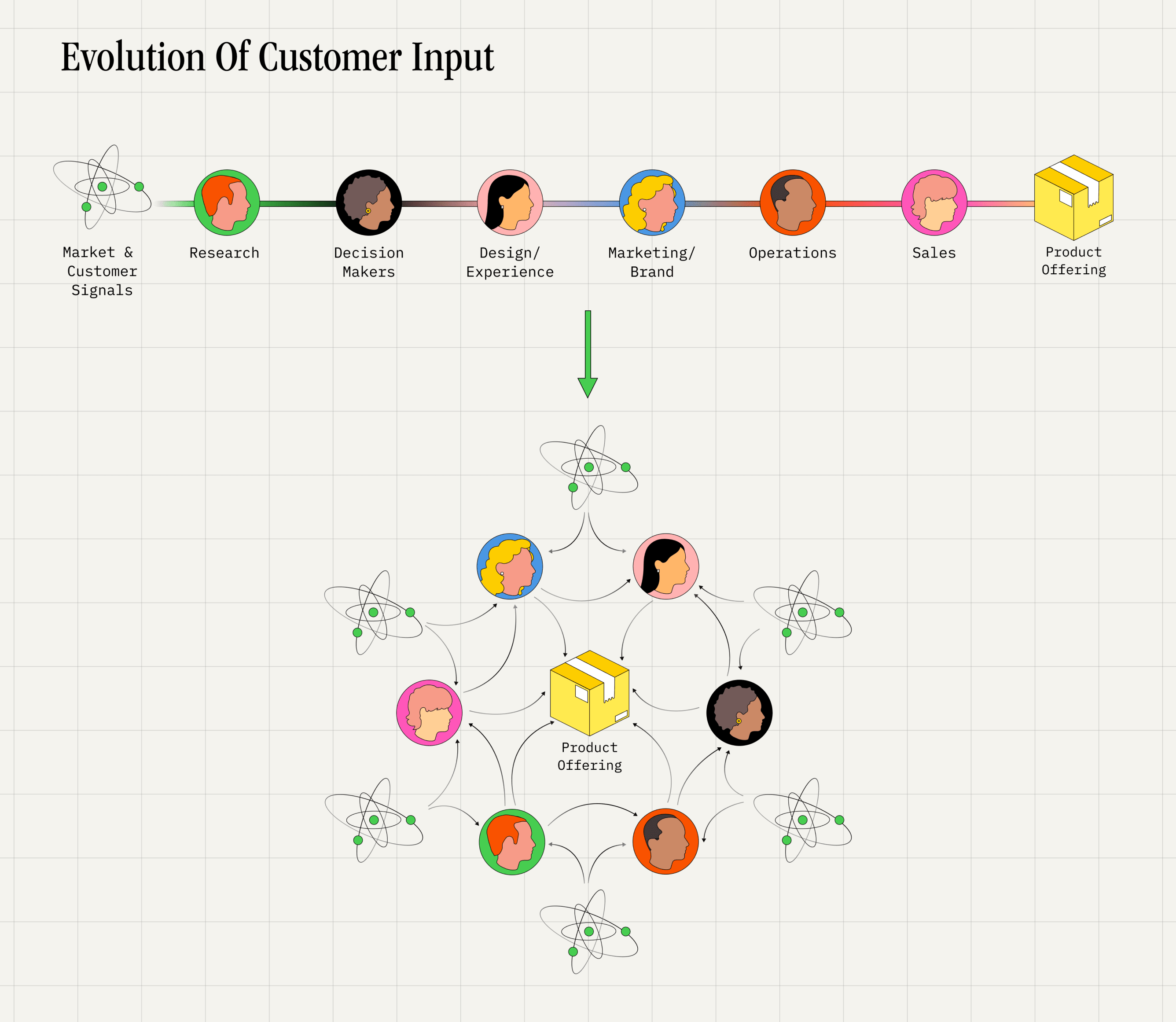
The gap is widening. Products move faster. Decisions happen across more teams. Customer-facing choices are made every day by people who cannot possibly carry years of research context in their heads.
Our Experience From Years of Building and Deploying Organizational Intelligence
From Archive to Active Knowledge
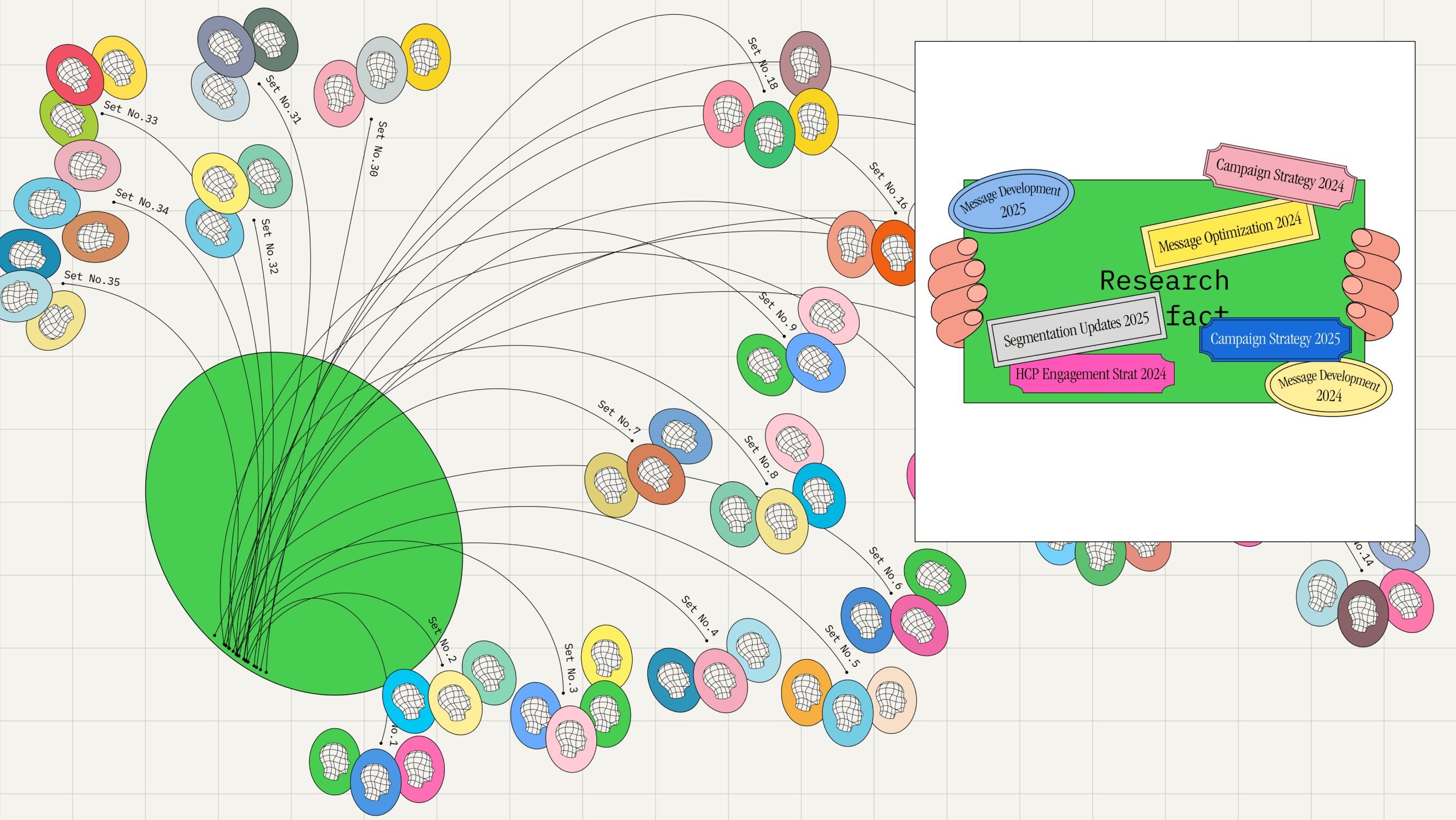
Over two years, we worked with a global pharmaceutical company to turn years of qualitative research into conversational, research-grounded personas.
The goal was not to create synthetic customers. It was to make established customer understanding easier to access and apply.
A marketer could pressure-test a message against an established customer worldview. A strategist could explore how different customer perspectives might shape a new opportunity. A designer could ask whether an emerging concept stayed faithful to what the organization already knew.
What began with one team expanded to nearly 200 users across the organization, putting thousands of archived interviews and prior learnings back into active use. Impact is measured not only in hours saved, but in duplicate research efforts avoided and resources freed up to answer the new questions that matter most.
Building functional organizational intelligence, doesn’t eliminate the need for research—it turns it into your competitive advantage.
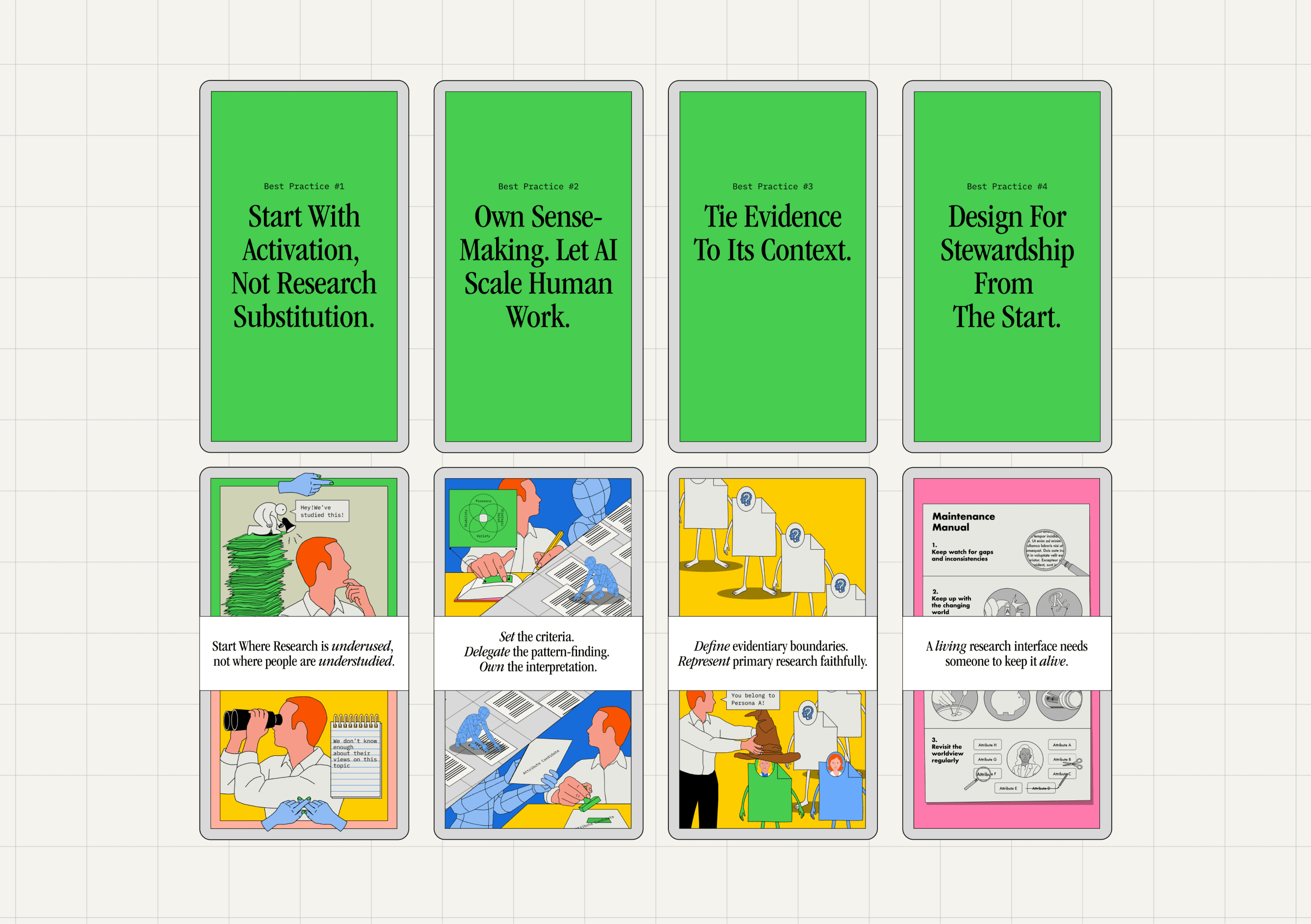
Start With Activation, Not Research Substitution.
Begin where strong research already exists but is difficult to keep present in everyday decisions. The fastest value often comes from extending the reach of knowledge you already trust, not replacing research you have not done.
Own Sense-Making. Let AI Scale Human Work
Use your experts to define the distinctions, criteria, and strategic questions that matter. Then use AI to search, classify, compare, and apply those rules at a scale people cannot reasonably manage alone.
Tie Evidence To It’s Context.
A technically relevant answer is not automatically a meaningful one. Who said something, what else you know about them, and the situation in which they said it are part of the evidence too. The standards you already use for rigorous research need to become part of the system itself.
Design for Stewardship From The Start.
Living knowledge systems need owners. Markets move. New evidence appears. Customer worldviews evolve. Someone must remain responsible for updating the information, questioning the model, and recognizing when the right answer is not another AI response, but new primary research.
IA Collaborative works with enterprise organizations at the intersection of behavioral insight, AI strategy, and consumer experience design. We prototype the future before our clients invest in building it.
Global Navigation
# IA Collaborative
> Navigation Map